


DC 4 Pole MCB 1000V | Solar PV Breaker
DC 4 Pole MCB 1000V | Solar PV Breaker
Couldn't load pickup availability
-
Ordered
- - -
Order Ready
- - -
Delivered

DC 4 Pole MCB 1000V | Solar PV Breaker
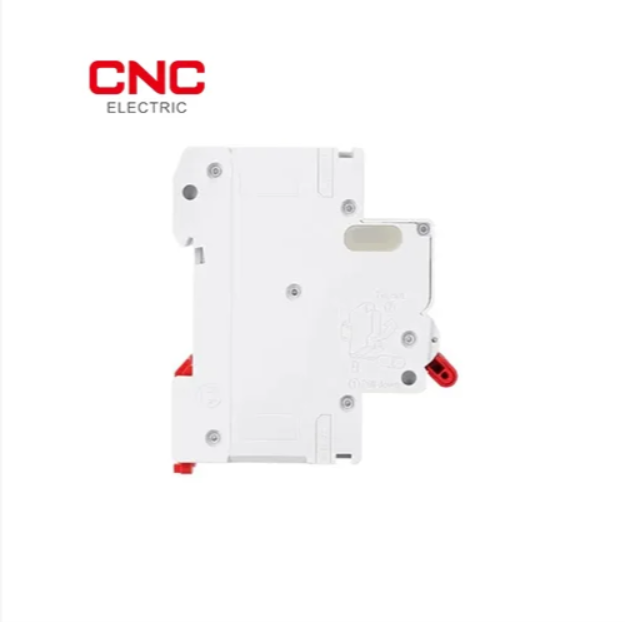
DC MCB 4 pole 1000V price in Pakistan matters when a solar installer needs a breaker that actually matches DC string voltage instead of a normal AC breaker forced into a PV job. This CNC Electric listing is sold locally from Rs.3,300 with selectable 16A, 20A, 32A and 63A options on a 4-pole DC breaker page. For rooftop solar, combiner boxes, battery-linked DC distribution and selected industrial DC circuits, it gives one practical benefit: you get DC-side overload, short-circuit and isolation protection in a format made for photovoltaic work instead of improvised panel wiring.
This is not the right breaker for every job. If the system current is much higher, you move up to a DC MCCB breaker. If the risk is lightning or switching surge damage, you still need a proper DC SPD. If the installer is trying to use a normal AC breaker on a solar string, that is the wrong comparison from the start. This page is for the buyer who needs a real DC breaker for a 1000V-class solar or DC distribution setup and wants a 4-pole format with practical ampere choices.
Key Features
- 4-pole DC MCB format for DC circuits up to 1000V on the local sales page.
- Selectable local current options: 16A, 20A, 32A and 63A.
- Local page states overload, short-circuit and isolation protection for photovoltaic, industrial, civil and communication systems.
- 6kA breaking-capacity class is published on the local product page.
- Standard DIN-rail mounting helps in solar protection panels and DC combiner layouts.
- Official family reference supports auxiliary contact, alarm contact and shunt-release compatibility in the wider breaker family.
- A better fit for solar strings and DC feeders than forcing a normal AC breaker into a DC job.
Technical Specifications
| Parameter | Value |
|---|---|
| Local sale product | DC 4 Pole MCB 1000V, 16A / 20A / 32A / 63A |
| Local displayed price | Rs.3,300 on the currently displayed local selector |
| Number of poles | 4 Pole |
| Rated working voltage | 1000V DC |
| Rated insulation voltage | 1200V DC |
| Rated impulse voltage | 4kV |
| Ultimate breaking capacity | 6kA class on the local page |
| Operating breaking capacity | Ics = 100% of Icu on local page |
| Tripping type / curve | Thermomagnetic, B / C / K family options shown on local page |
| Mechanical life | 20,000 operations |
| Electrical life | PV: 1500 / PVn: 300 on local page |
| Working temperature | -35°C to +70°C |
| Storage temperature | -40°C to +85°C |
| Protection degree | IP20 |
| Installation method | DIN35 standard rail |
| Wiring capacity | 2.5-25mm² |
| Terminal torque | 3.5 N·m |
| Standard | IEC/EN 60947-2 |
This description uses only data published on the live product page. Exact selector-by-selector prices for all ampere options, full dimensional drawing, accessory part numbers and local wiring diagram details are not currently listed in a clean local sales format and have not been guessed.
Product Range and Price Guide
| Amp option | Poles | Voltage | Best fit | Price note |
|---|---|---|---|---|
| 16A | 4 Pole | 1000V DC | Lighter PV string current and smaller DC feeders | Confirm on live selector; page currently displays Rs.3,300 |
| 20A | 4 Pole | 1000V DC | Common solar string and combiner current band | Confirm on live selector; page currently displays Rs.3,300 |
| 32A | 4 Pole | 1000V DC | Heavier DC feeder duty and selected combiner circuits | Confirm on live selector; page currently displays Rs.3,300 |
| 63A | 4 Pole | 1000V DC | Upper end of the listed family for larger DC branch circuits | Confirm on live selector; page currently displays Rs.3,300 |
Applications — Where to Use This DC MCB
This breaker belongs on the DC side of the system. In Lahore rooftop solar work, installers commonly need a proper breaker between the string and the combiner or between the DC source and a protected enclosure. In Karachi, where heat, salt air and switchgear misuse already create enough problems, using the right DC breaker is far better than forcing an AC breaker into a PV job. In Faisalabad factory-roof solar and process-power applications, a 4-pole 1000V DC breaker can fit combiner-style layouts, string grouping, battery-linked feeders and selected DC distribution points where dependable isolation matters.
| Application | Recommended use | Why this breaker fits |
|---|---|---|
| Solar string isolation | Use on a properly designed PV DC side | 1000V DC class and 4-pole format suit PV distribution logic better than AC protection gear |
| Combiner box protection | Use alongside DC SPD and fuse/isolator strategy where needed | Provides DC-side overload and short-circuit protection in a DIN-rail format |
| Battery-linked DC feeder | Use only where voltage and current match the design envelope | Better matched to DC duty than a normal AC MCB |
| Telecom or communication DC panel | Use where the DC distribution design calls for miniature breaker protection | The local page itself lists communication systems as a target use |
| Industrial DC auxiliary circuits | Use in properly engineered DC distribution sections | The local product page lists industrial and civil DC systems among the intended applications |
How to Choose the Right Amp Rating
Do not choose the breaker only by the biggest amp number. Match it to the conductor, the expected DC current, the combiner design and the fault-clearing logic of the system. A bigger ampere rating is not automatically safer. It can reduce protection if the wiring and source current do not justify it. If the design has high fault energy or current levels above miniature-breaker territory, move up to a proper DC MCCB instead of stretching a small breaker beyond its role.
| System condition | Likely choice | Why |
|---|---|---|
| Small PV string current and lighter conductor size | 16A or 20A | Closer to common string-level protection ranges |
| Heavier combiner or DC branch current | 32A | Common step when current rises above lighter string-protection bands |
| Upper-end miniature DC feeder need | 63A | Highest listed current on the local page |
| High-current DC distribution beyond miniature-breaker comfort | Use DC MCCB instead | Miniature DC breakers are not the answer for every larger DC panel |
DC MCB vs Alternatives — Why CNC?
| Point | CNC DC MCB 4 Pole 1000V | Generic AC breaker used on DC | DC MCCB |
|---|---|---|---|
| Main purpose | Miniature DC-side protection and isolation for PV and DC systems | Usually the wrong device class for true DC duty | Larger DC distribution and higher-current jobs |
| Voltage match | 1000V DC on local page | Often unsuitable or unsafe as a DC substitute | Better for heavier DC voltage/current design envelopes |
| Panel footprint | Compact DIN-rail format | May look compact but the duty mismatch is the real issue | Larger physical footprint |
| When to choose it | When you need a real 1000V-class DC breaker in miniature format | Do not choose this route for proper PV design | When miniature-breaker size or current range is no longer enough |
What This Product Does NOT Protect Against
This product does not replace a DC SPD, a correctly sized solar fuse, or a proper DC isolator where the system design requires them. It does not fix poor combiner-box layout, wrong cable sizing, loose lugs, water ingress, or a bad inverter-side design. It is also not the right answer for every high-current DC panel. Some jobs belong to a DC MCCB, not to a miniature breaker.
For a full solar or DC protection setup, pair the breaker with the right DC SPD, a suitable solar protection bundle, the correct DB box, and if the system includes voltage-sensitive AC loads, add a proper voltage protector on the AC side as well.
Installation Guide
- Mount the breaker on a proper DIN rail inside a suitably rated DC enclosure or combiner box.
- Confirm the DC voltage class, current class, cable size and protection coordination before landing any wires.
- Use correct conductor size within the published wiring range and tighten terminals correctly to avoid hot joints.
- Coordinate the breaker with upstream and downstream DC protection such as fuses, isolators and DC surge protection.
- Before energizing, verify polarity logic, enclosure sealing, and the full DC path from array to combiner or distribution section.
Add Fire Protection to Your Panel
Protect your panel with a DIN Rail Aerosol Fire Extinguisher — only Rs.2,500. Auto activation. 10-year shelf life. Fire safety guide →
Related Products
- DC breakers for other solar and battery-side protection options.
- DC MCCB breakers when current level or panel duty is beyond miniature-breaker range.
- DC SPDs for lightning and switching surge protection on PV strings and DC feeders.
- DC isolators when manual isolation is required by the design.
- Solar bundles for a more complete pre-matched protection package.
- DB boxes to house the DC protection assembly correctly.
- SPD on the AC side when inverter-fed loads also need surge protection.
- Fire extinguisher products as the final panel-safety add-on.
- Solar DB Box Guide for installer-side planning.
- Types of Circuit Breakers Guide for broader breaker selection.
Frequently Asked Questions
1. What is a DC 4 pole MCB used for in Pakistan?
It is used for DC-side overload, short-circuit and isolation protection in solar photovoltaic systems, battery-linked DC circuits and selected communication or industrial DC panels.
2. What is the price of this DC 4 pole 1000V breaker in Pakistan?
The current local product page displays Rs.3,300. Because the page has selectable 16A, 20A, 32A and 63A options, confirm the live selector before checkout if you need exact variant pricing.
3. Is this a DC MCB or a DC MCCB?
This product is a DC MCB. It is for miniature-breaker duty. If the system current and fault-duty are higher, move to a DC MCCB.
4. Can I use a normal AC breaker instead of this DC breaker?
That is not the right approach for a real PV DC system. DC duty and arc behavior are different. Use a proper DC breaker designed for the voltage and current involved.
5. What ampere options are available on the local page?
The local page currently shows 16A, 20A, 32A and 63A selector options on the 4-pole 1000V DC breaker listing.
6. Does this breaker protect against solar surges or lightning?
No. Breakers and SPDs do different jobs. Use a DC SPD for surge protection.
7. Is this suitable for combiner boxes?
Yes, it can suit combiner-box and DC distribution work where the voltage and current match the design and the rest of the protection scheme is correct.
8. Where can I buy this DC MCB in Pakistan?
You can buy it from CNC Electric Pakistan through the live product page and get help on the correct breaker, fuse, isolator and SPD combination before ordering.
This 4-pole 1000V DC MCB is the right buy when you need a real photovoltaic DC breaker in miniature format instead of a forced AC workaround. It suits solar strings, combiner-box protection, battery-linked DC feeders and selected communication or industrial DC circuits when the design stays inside its published class. For stock status, selector confirmation and help choosing the correct DC SPD, isolator or DC MCCB, contact CNC Electric Pakistan on WhatsApp 0326-1111376. Orders above Rs.10,000 qualify for free delivery.


Power Your Home with Reliable Solar Storage
Solarleaf brings you high‑quality solar panels, batteries, and inverters designed for Pakistani households. With expert support and guaranteed performance, we make clean energy simple and affordable.